Skip to content
Care we provide

Adjustments, itemized — time, technique and what you leave with

Everything below happens in one suite on Roswell Road, with Dr. Kuhlman doing the exam and the adjusting himself. Visit lengths are real lengths, not scheduling optimism.

Six complaints, six exam sequences

Pick the one that sounds like your week. Each card lists what the first appointment covers and what the following visits look like.

Low back pain & sciatica

The bulk of the schedule. Lumbar restriction, disc irritation and the nerve pain that runs into the glute or calf.

  • Orthopedic and straight-leg testing, reflex and strength screens
  • Lumbar adjusting: diversified, drop-table or instrument by tolerance
  • Flexion-distraction traction for disc-related leg pain
  • Two home movements, thirty seconds each, twice a day
  • Re-exam at visit six with the same measurements
Neck, shoulder & desk posture

Cervical stiffness, trap tension and the mid-back ache that shows up around 3pm on a laptop day.

  • Cervical range of motion measured in degrees, six directions
  • Upper cervical and thoracic adjusting, seated or supine
  • Soft tissue work on levator and upper trapezius
  • Monitor height, chair depth and mouse position sorted on paper
  • Guidance for driving posture on the 400 commute

Headaches of cervical origin

Headaches that start at the base of the skull, sit behind one eye, or arrive with jaw clenching.

  • Screening to separate cervicogenic, tension and migraine patterns
  • Gentle upper cervical work — instrument if you prefer no rotation
  • Jaw and suboccipital release when the exam points there
  • Trigger diary for two weeks: sleep, screens, caffeine, stress
  • Referral to neurology if the pattern does not fit the exam

Auto injury & whiplash

After a collision on Roswell Rd or the connector. Care and documentation run together from the first visit.

  • Baseline exam recorded the day you come in, with findings dated
  • Narrative reports for adjusters and attorneys on request
  • Gentle early care, progressing as the neck tolerates load
  • Direct billing for personal injury claims — bring the claim number
  • Coordination with imaging when symptoms warrant it

Sports strains & overuse

Golf backs from Chastain, tennis shoulders, runners with a dropping hip and lifters who tweaked something.

  • Movement screen for the joint above and below the sore one
  • Adjusting the restricted segment, then loading it under control
  • Return-to-play progression written in weeks, not vibes
  • Taping or bracing advice when it actually helps
  • Handoff to a physical therapist for heavy strength phases

Pregnancy & postpartum

Pelvic and low back care through all three trimesters, and the complaints that arrive with carrying a newborn.

  • Side-lying positioning and pelvic blocking — no prone table pressure
  • Round ligament, sacroiliac and pubic symphysis complaints
  • Rib and thoracic work for late-pregnancy breathing
  • Wrist, neck and mid-back care in the first months after birth
  • Notes shared with your OB or midwife on request
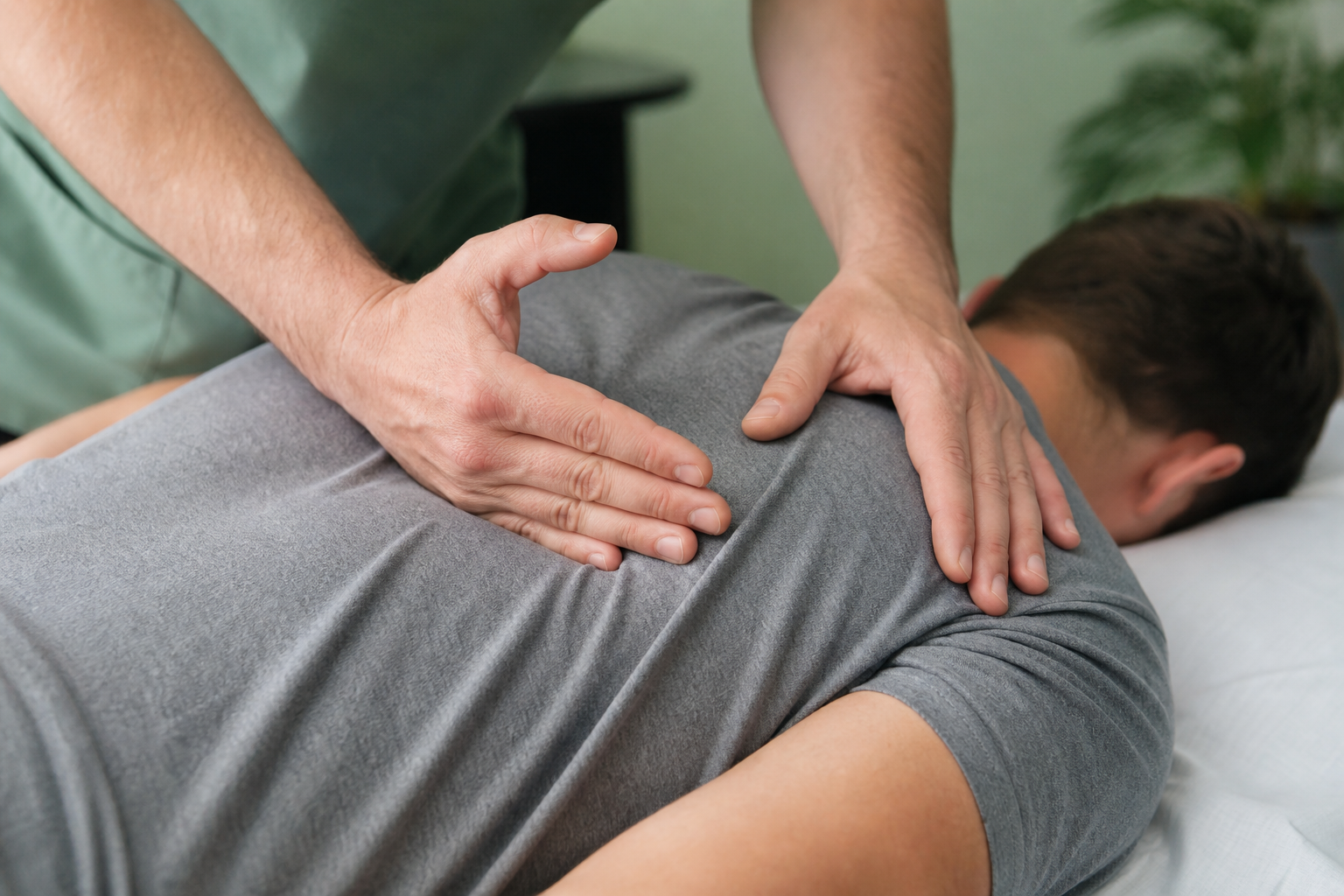
Hands performing a gentle thoracic adjustment on a patient
Technique

Three ways to move a joint, chosen from the exam

Some spines want a quick, specific thrust. Some want the table to do the work. Some — older patients, acute necks, anyone who would rather not be twisted — do better with an instrument. All three are available at every visit, and you are told which one is coming.

  • Diversified. Specific manual adjustment, the classic chiropractic contact.
  • Drop-table. A section of the table drops a fraction of an inch, so less force is needed.
  • Instrument. A spring-loaded adjustor delivers a small, measured impulse — no rotation, no cavitation.

Adjunct care in the room: flexion-distraction traction, intersegmental table, moist heat, and hands-on soft tissue work. No package required to access any of it.

Honest limits

When we send you somewhere else instead

A practice that treats everything treats nothing well. These findings get a referral the same day, and we help make the call.

  • Progressive weakness, foot drop or loss of bowel or bladder control
  • Unexplained weight loss, night pain or fever alongside back pain
  • Suspected fracture, recent significant trauma, or known bone disease
  • Headache with vision change, slurred speech or sudden severity
  • Pain that has not moved at all after six well-attended visits